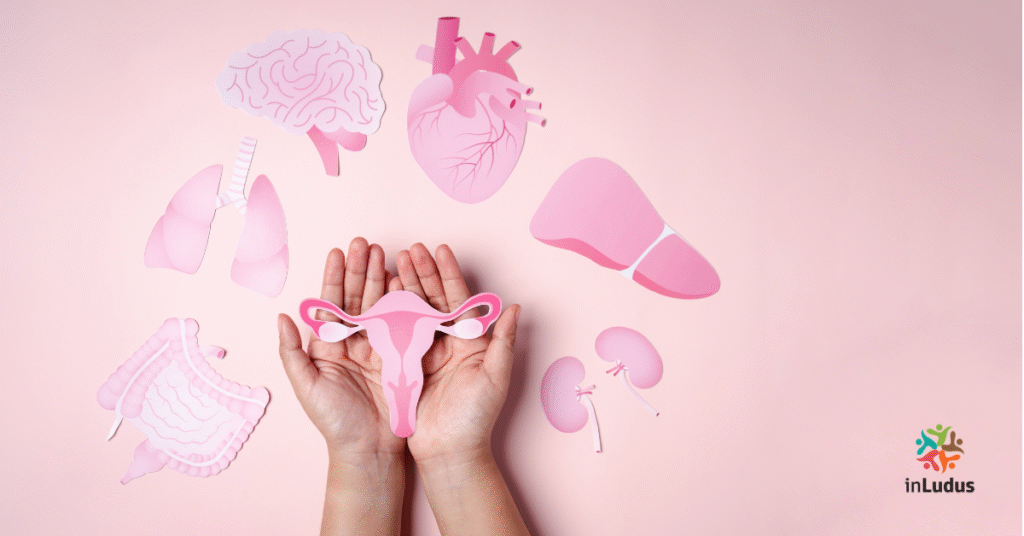
During Menstrual Health Month, a reflection on how our experiences, taboos, and the words we associate with menstruation shape the way we talk about it with others..
I got my first period when I was almost 14 years old.
Suddenly, a brown stain appeared on my underwear. Even though I had already been informed about it, it shocked me anyway. After that first episode, my period didn’t come back for about six months. And when it did return, the bleeding lasted for almost a week: heavy, painful, and impossible to ignore.
I remember thinking, “Will it always be like this?”
I often find myself thinking back to this question when working on the topics of puberty and the menstrual cycle. Because talking about the cycle is not just about delivering accurate facts. When we approach these topics—whether as teachers, healthcare professionals, educators, or parents—we always bring our own personal history with us
Reflections on Menstrual Health Month
May is the month dedicated to menstrual health, and May 28th marks International Menstrual Hygiene Day. It is a great opportunity to pause for a moment and reflect not only on what we know about the cycle, but also on how we have experienced, named, or avoided it over time.
For some people, menstruation has been accompanied by silence, shame, or discomfort.
For others, by confusing information, jokes, fear, or a lack of dialogue.
And even those who have never menstruated have formed images, ideas, and representations about the topic by observing it from the outside.
These experiences do not stay on the sidelines when we work with adolescents, groups, or families. They are reflected in our words, our silences, the activities we choose, and the questions we welcome or avoid.
That is why, in the educational programs I design, one of the very first steps is not to jump straight into choosing an activity or preparing a presentation. The first step is trying to analyze our own vision of the cycle. Not to judge ourselves or to “find the right answer,” but to acknowledge where we are speaking from.
Breaking taboos during menstrual health month Guidelines
We often think that addressing these topics means, above all, knowing a lot of things. In reality, a significant part of educational work also consists of creating a space where people can talk about the body without shame and without the fear of making a mistake. And it is hard to create that space if we don’t grant ourselves a moment to listen to ourselves first.
I propose a small exercise: take a piece of paper and write down at least three words that come to mind when you think about menstruation.
Don’t look for the “right” words, don’t analyze them right away. Just observe what comes up.
When I think about my own experience, the first words that come to mind are: annoyance, discomfort, displeasure. Only much later, over time, another word was added: ownership.
And perhaps that is precisely one of the most interesting aspects of educational work surrounding the menstrual cycle: understanding that the way we name it and live it can change.
To learn more about this global initiative, you can visit the official [Menstrual Hygiene Day](https://menstrualhygieneday.org) website.
🌿 A proposal to rethink how the menstrual cycle is integrated into schools: [LINK HERE]
🌿 A reflection on how to normalize the topic of menstruation in daily life: [LINK HERE]